Guard numbers are the closest thing barbering has to a sizing system, and like shoe sizes, they only help if you know yours. A guard is the plastic comb clipped over a clipper blade, and its number states the length it leaves, in eighths of an inch. A No. 2 leaves a quarter inch. A No. 4 leaves half an inch. Everything else in this guide is about choosing: which number, where on the head, and for which situation in your life in Indian Trail.
Treat this as a decision guide rather than a lecture. You do not need to memorize the whole scale. You need to match a few common situations to their numbers, learn your own, and understand what changes when you move one step up or down.
The scale, in one place
| Guard | Length left | How it reads | Typical use |
|---|---|---|---|
| No guard (zero) | Very short stubble | Nearly bare, skin texture shows | Base of a skin fade, edging foundations |
| No. 1 | 1/8 inch | Very short, scalp clearly visible | Bold buzz cuts, low point of guard fades |
| No. 2 | 1/4 inch | Short and tidy, some scalp shows | Classic buzz, fade sides, short back and sides |
| No. 3 | 3/8 inch | Short but covered | Gentler buzz, business-short sides |
| No. 4 | 1/2 inch | Neat, unmistakably hair-covered | Soft buzz, longer clipper cuts, cautious first short cut |
| No. 6 | 3/4 inch | Full short cut | Longer tops cut by clipper, thick hair management |
| No. 8 | 1 inch | The longest guard cut | One-length longer cuts, blending into scissor work |
Barbers also use the clipper lever for half-steps and blending guards between numbers, which is how a 2 becomes a slope up to a 5 instead of two distinct shelves. Those in-between moves are craft, and you can leave them to the chair. Your decisions are the anchor numbers: shortest on the sides, and length on top.
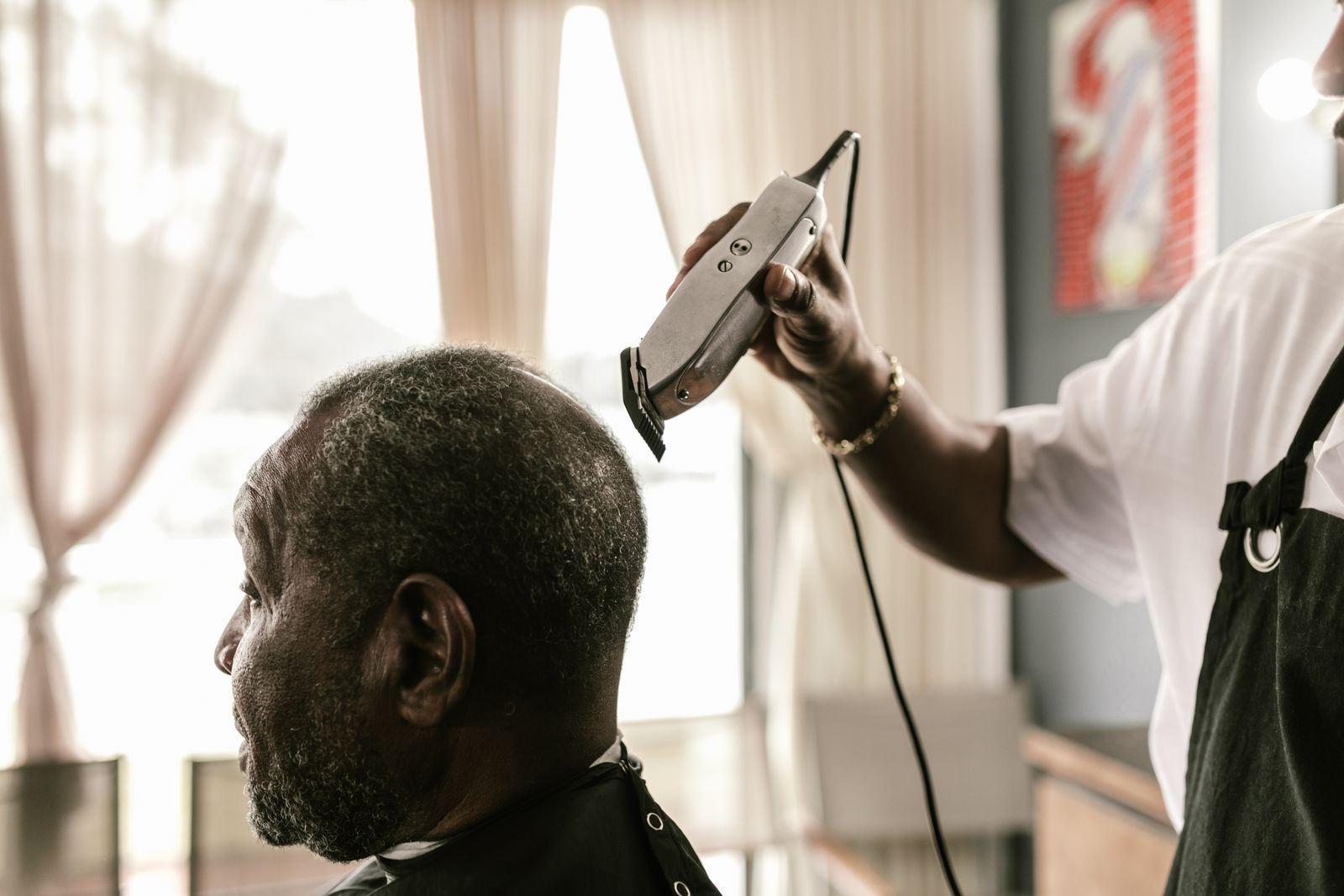
Decisions by situation
You want the safest first short cut. Choose a 4 on top and a 3 on the sides, or a 4 all over. It reads as a clear decision without severity, hides minor head-shape quirks, and if you want shorter, the barber can go down a number in the same visit.
You want a sharp, high-contrast look. That is a 1 or skin at the base of the sides, blended up, with length kept on top. Accept the contract that comes with it: a prime of about two weeks and a standing appointment rhythm.
Your hair is thinning. Shorter and more uniform usually wins. A 2 or 3 all over, or the top one guard longer than the sides, reduces the contrast between full and thin areas better than any longer arrangement.
Your hair is thick and fast-growing. Numbers run visually shorter on dense hair in a good way; a 3 can look like another man's 2. You may also choose one number longer than the charts suggest, since your growth reaches the untidy stage sooner in appearance than in measurement.
You wear a hat or helmet for work. Very short sides under a hat band can irritate skin and show a compressed line. A 2 or 3 on the sides is usually the practical floor, and it grows out without a visible hat ring.
How length reads differently on your hair
The table gives measurements, but hair type translates them. Straight hair lies flat, so a given guard looks longer and sleeker. Wavy and curly hair springs up, so the same guard looks shorter and fuller once dry, and a cut judged wet will surprise you. Fine or light-colored hair shows scalp through at lengths where dark, coarse hair still looks solid. This is why a friend's number is a starting suggestion, not a prescription, and why your own record, once a cut has pleased you, outranks every chart including this one.
At Scottie Cuts, the practical move is to ask at the end of a good cut which guards were used on the top and the sides, and to write both numbers in your phone before you leave the parking lot. Two numbers, ten seconds, and every future cut in any shop starts from knowledge instead of reconstruction.

The one rule for changing numbers
Move one step at a time. The difference between adjacent guards is an eighth of an inch, which is visible but not drastic, exactly the size of experiment a haircut allows. Jumping from a 4 to a 1 because a photo looked good removes your ability to learn what you actually like, and the tuition is three weeks of waiting. If the barber suggests a bigger jump for your hair type or hairline, that advice is worth hearing, but a one-step trial with a promised adjustment next visit is never a foolish request.
Common questions
What guard should I ask for if I have never had a clipper cut?
Start longer than your instinct, around a No. 4 on top with a No. 3 on the sides. You can go shorter in the same visit, and a cautious first step teaches you how numbers read on your own hair.
Do guard numbers mean the same on every clipper brand?
The numbered guards follow the same eighths-of-an-inch convention across major brands, so a No. 3 is about three-eighths of an inch anywhere. Blending and lever work can still make results vary slightly by barber.
What is the difference between a No. 0 and no guard?
They refer to essentially the same thing in most shops: the bare blade with no plastic guard attached, leaving very short stubble rather than truly bare skin.
Photos in this guide are representative stock images.
← All guides from Scottie Cuts← Back to Scottie Cuts